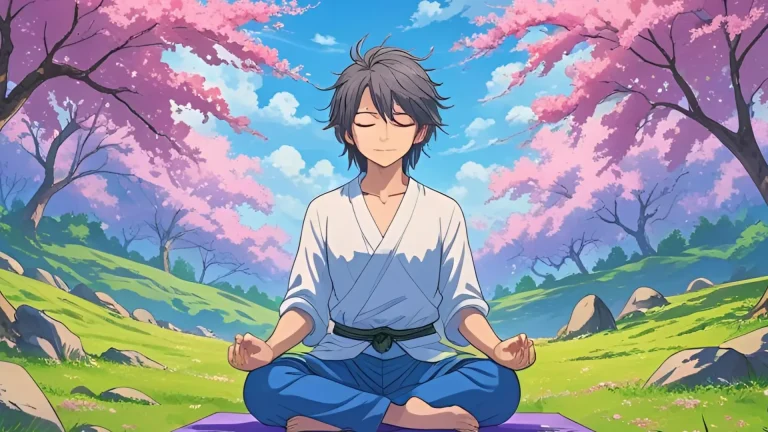
Healing Your Inner Child Meditation [Script]
If you still feel hurt, anxious, or unworthy in situations that shouldn’t affect you anymore, it may be your inner child asking for attention.
You might notice it in small, confusing moments. Someone criticizes you and suddenly you feel crushed, not just annoyed. You feel rejected when plans change. You react with fear, shame, or sadness that feels far bigger than the situation deserves. In those moments, it often isn’t your adult self reacting—it’s a younger version of you who never fully healed.
One of the most gentle and effective ways to begin healing that part of yourself is through meditation. In this guide, I’ll show you how, based on my 25 years of experience guiding students through inner child work.
Inner child meditation is a deeply healing practice that helps you reconnect with and nurture the part of you shaped by early life experiences. As a meditation teacher who has guided many clients through this journey, I’ve seen how powerful it can be in releasing old emotional wounds and cultivating lasting self-compassion.
Grounded in practices like Psychosynthesis and recommended by experts such as Lucia Capacchione, this meditation offers a safe, gentle way to begin healing from within. My clients and I have found that it works wonders.
Inner Child Healing Meditation: Nurture Your Inner Self
Inner Child Meditation Script
If you would like me to personally guide you through this meditation and help you navigate any emotions that arise, I offer one-to-one coaching sessions specifically for inner child healing.
When I guide clients through inner child meditation, we always begin by creating a strong sense of safety and relaxation in the body. So let’s begin the same way here.
Let’s begin by taking a moment to get into a comfortable meditation position. Close your eyes and take a deep breath. Let your body relax, gently releasing any tension you might be holding. Allow your muscles to soften, and feel the weight of your body sinking into the surface beneath you.
Now, bring your attention to your breath. Breathe in deeply through your nose, holding for a count of four. Pause. Then, exhale through your mouth for four, pausing again before repeating the cycle. Let your breath come from deep within your belly, feeling the rise and fall of your abdomen with each inhale and exhale.
As you continue to breathe, imagine a place of stillness within you—a space of pure calm and tranquility. Let yourself rest there for just a moment, letting go of any worries or distractions.
Now, in the distance, you notice a small figure slowly approaching. As it draws closer, you begin to see more clearly—it’s your younger self. What age do they appear to be? Take a moment to decide. This younger version of you stands before you, smiling warmly, and you can feel an unspoken connection between the two of you—a bond of love and understanding.
Your younger self smiles at you and starts to engage in something that once brought you immense joy. What is it? Watch them with a sense of nostalgia and fondness as they laugh and play, remembering the simple pleasures that once filled your life with happiness.
As you observe this, you softly say, “I’m so grateful for those moments we shared.” Your younger self laughs joyfully, then walks toward you. They embrace you lovingly, and you respond with your own gentle hug. Whispering to them, “I love you, and I will protect you always.” Feel their warmth and trust in your embrace.
For many people, this is the moment when emotions begin to surface. You might feel sadness, relief, warmth, or even tears. If that happens, know that it is completely normal. When I work with clients one-on-one, this is often where the deepest healing begins, because we can gently stay with those feelings instead of pulling away from them.
Hold this moment in your heart for a few breaths. Ask your inner child if there’s anything they would like to tell you. Listen closely to their message, knowing that this is an opportunity for deeper healing.
After a while, your inner child starts to walk away, slowly fading into the distance. You whisper, “I’ll see you again soon.” Take a deep, soothing breath.
This meditation is just the beginning of your healing journey. Remember, it’s important to nurture your inner child at different ages, and you can always return to this meditation whenever you feel the need to reconnect. Try revisiting it with a different age of your inner child, or simply return tomorrow for another round of healing.
If you found this meditation powerful but also emotionally intense, you don’t have to navigate that process alone. I regularly guide students through this work in private sessions, helping them move through difficult emotions safely and at their own pace.
More Meditations for Healing the Inner Child
The following are the techniques that my clients and I have found most helpful for healing the inner child.
Self-Inquiry
Sometimes we get too hung up on our idea of ourselves in the present moment. For instance, you might shun your childlike ways and force yourself to always act mature and serious. This essentially is a problem with the ego. But you can overcome it.
One of the best solutions is to use self-inquiry meditation, a practice often used by spiritual teachers like Eckhart Tolle, to connect with your true self and heal internal conflicts.
Meditation for Creativity
Our inner child is often linked to our sense of creativity. Indeed, if you think about most kids, they are often a lot more creative than adults. Pablo Picasso once said, “Everyone is born an artist. The trick is remaining an artist once you grow up.”
Cultivating your creative mind through meditation can help you reconnect with that playful, imaginative part of yourself that may have been suppressed over time.
Meditation for Self-Love
A large part of healing the inner child is cultivating self-love. We need to love and nurture ourselves at all different ages. Have a vision of yourself as a young child, early teen, late teen. You should love every one of them.
Meditation for self-love helps by guiding you through a process of compassionate self-reflection and acceptance, supported by research in positive psychology.
Scientific Support for Inner Child Healing
Research in the fields of psychology and trauma therapy shows that reconnecting with our inner child can help release pent-up emotions from childhood experiences. This process supports emotional regulation and can contribute to long-term mental health.
Studies also suggest that mindfulness-based practices, like inner child meditation, can significantly reduce anxiety and depression by fostering emotional balance and self-awareness.
In my own work with students, I’ve seen this reflected in real life—people who once felt constantly triggered or emotionally overwhelmed often begin to feel calmer, more grounded, and more in control of their reactions after practicing this type of meditation consistently.
Heal the Wounds of Your Inner Child
Your relationship with your inner child shapes your emotional and mental well-being. When that relationship is loving and grounded, it shows. People who are emotionally balanced often have a strong, compassionate connection to their younger self.
But if childhood came with trauma, neglect, or emotional pain, those early wounds can quietly follow us into adulthood, influencing our relationships, confidence, and sense of safety in the world.
Inner child meditation is a way to gently reconnect, tend to those hurts, and start rebuilding trust within. It’s not about fixing the past—it’s about meeting yourself now with softness, understanding, and care.
And while you can begin this journey on your own, many people find that having a calm, experienced guide makes the process feel safer and allows them to go deeper than they could by themselves.
If this is something you feel ready to explore, I offer one-to-one meditation sessions where we work together to heal your inner child in a structured, supportive environment.

Paul Harrison is a meditation teacher with 25 years of experience and a deep passion for helping others. Known for his empathy and authentic approach, he’s dedicated to guiding individuals and teams toward mindfulness, clarity, and well-being.