Meditation for Nervous System Regulation: My Journey
For most of my life, I was living in survival mode — my nervous system constantly on edge, reacting as though the world wasn’t safe.
As someone with BPD and PTSD, emotional dysregulation wasn’t occasional — it was constant. Even small stressors could send me spiraling into anxiety, dissociation, or emotional flooding. My body didn’t feel like a safe place to live in. My mind didn’t feel like a place I could trust.
But one moment stands out above the rest — the moment that changed everything.
The Airport Breakdown
Years ago, after immigrating to Canada, I hit a breaking point. My mother was sick back in England. My girlfriend and I had just broken up. I was completely alone, far from everything familiar, and emotionally crumbling under the pressure.
I remember rushing to the airport to catch a last-minute flight back to England, and by the time I got there, I was already in pieces. It’s hard to describe what that kind of dysregulation feels like unless you’ve been through it.
My entire body felt like it was being electrocuted. My thoughts were scattered. The airport — filled with lights, announcements, people — felt like a horror movie. I couldn’t find my center. I couldn’t find myself. I couldn’t think clearly, couldn’t settle, couldn’t breathe. I felt like I was about to collapse — mentally, emotionally, physically.
What is nervous system dysregulation?
Your nervous system is your body’s internal alarm system — constantly scanning for safety or danger. When it’s dysregulated, it gets stuck in survival mode: anxious, hypervigilant, frozen, or shut down, even when the threat is gone.
Meditation as a Lifeline
It wasn’t until I got onto the plane that something shifted. I closed my eyes and — out of sheer desperation — began to focus on my breath. Not to feel good. Just to survive the flight. Just to do something other than panic. I forced myself to inhale… hold… exhale. Over and over. I did this for the entire 7-hour flight. It didn’t bring peace. But it gave me something solid to anchor into. And sometimes, that’s enough.
That was the moment I realized something: I didn’t need to be healed to help myself. I just needed a tool. Something simple. Something that worked. That tool was meditation.
What is meditation — and how does it help with nervous system regulation?
Meditation is the practice of gently training the mind to return to the present moment — most often through breath, body awareness, or stillness.
According to Harvard Medical School and Stanford Neuroscience Institute, regular meditation calms the amygdala (your brain’s fear center), increases vagal tone (key to parasympathetic regulation), and reduces baseline anxiety and reactivity. In short: it helps your body feel safe again — one breath at a time.
Guided Meditation for Nerve System Regulation

The Turning Point: Sitting on the Grass
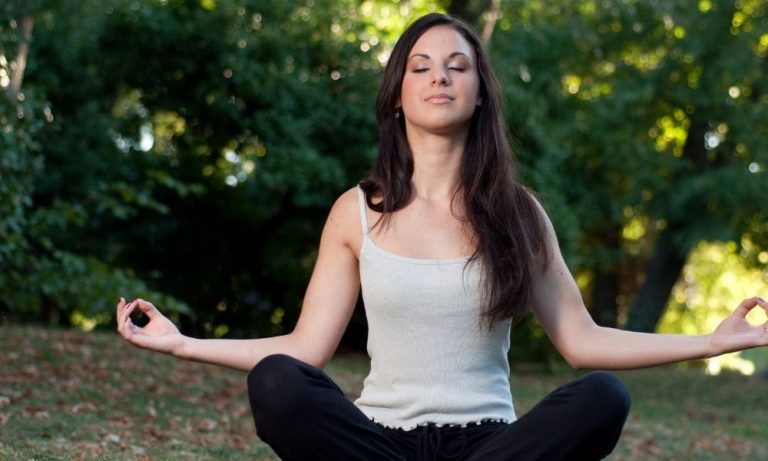
There was one quiet moment when I realized I was healing. I had been recovering from another stress event. After weeks of sitting with myself, breathing through discomfort, and letting my body recalibrate… I went outside and sat on the grass. And something beautiful happened: I noticed everything. The feeling of the grass on my skin. The softness of the breeze. The way the light moved across the leaves.
I wasn’t thinking about the past. I wasn’t worried about the future. I was simply present.
That moment didn’t come from striving. It came from showing up — consistently — for myself. Letting my nervous system rebuild its sense of safety, day by day. That’s what meditation became for me: not an escape, but a way to stay. A way to meet the moment without fear.

What Nervous System Healing Feels Like
Over time, meditation became a daily lifeline. I didn’t always know what I was doing. Some days, I only managed a few minutes. But I kept returning to it. Today, many years later, nervous system regulation shows up in the little things. When something stressful happens, I feel the old wave of anxiety rise… but I don’t drown in it. I pause. I breathe. And I remind myself: “This is hard, but I’m okay.” That’s the real gift. Not perfection. Not constant peace. Just the ability to not collapse. To respond, not react. To stay connected, not shut down. To breathe through the storm.
As a teacher now, this is how I guide others. I don’t start with theory or try to get people to “feel calm.” I start with something real and tangible: the breath. I invite them to observe it. I repeat: “We’re just sitting. Just breathing. Just being here.” That simplicity becomes safety. That repetition becomes rhythm. And that rhythm becomes regulation.
Best Meditations for Nervous System Regulation
| Meditation Technique | How It Regulates the Nervous System |
|---|---|
| Breath Awareness Meditation | Slows respiration and stimulates the vagus nerve, activating the parasympathetic (“rest and digest”) system. |
| Body Scan Meditation | Improves interoception and reduces muscle tension, which helps down-regulate sympathetic arousal. |
| Loving-Kindness Meditation (Metta) | Increases feelings of safety and connection, calming the amygdala and reducing stress hormones. |
| Visualization Meditation | Engages the imagination in calming scenes, which reduces threat perception and soothes the nervous system. |
| Chanting or Mantra Meditation | Repetitive sound vibrations activate the vagus nerve and induce a parasympathetic state. |
| Walking Meditation | Combines gentle movement with mindfulness, helping to regulate both physical energy and emotional state. |
| Wuwei (Effortless Awareness) | Teaches non-reactivity and trust in natural rhythms, lowering chronic hypervigilance in the nervous system. |
| 4-7-8 Breathing | Specific breath ratios signal safety to the brain, lowering heart rate and calming the autonomic nervous system. |
| Vagal Toning Breathwork | Stimulates the vagus nerve directly through humming, deep exhalations, or breath holds, improving vagal tone. |
A Simple Grounding Practice You Can Try
Here’s a short meditation I often teach to students navigating dysregulation:
- Sit somewhere safe. A chair, a bed, a cushion — anywhere you feel grounded.
- Place one hand on your chest, one on your belly.
- Feel the movement of your breath. Inhale for 4 counts. Hold for 2. Exhale for 6. Repeat this slowly and gently. Don’t force anything.
- Whisper to yourself: “I’m safe. I’m here. I can handle this moment.” Even one minute of this can start to shift your nervous system.
Final Words
Meditation didn’t fix me. It met me — right where I was. In airports. In garden grass. In silent breakdowns and quiet victories. It helped me through panic, heartbreak, and survival. It became the tool that helped me rebuild a relationship with my body and mind.
Now, as a teacher, it’s my joy to pass that on. To offer others the same anchor — not as an ideal, but as a lived, embodied practice.
The pain comes and goes like waves. Sometimes it feels like you’re drowning. But the ocean always quiets again. With your practice, you’ll learn how to float.
So if your nervous system is frayed, fragile, or fried — begin small. Begin anywhere. Just begin. Because even the softest breath can change everything.

Paul Harrison is a meditation teacher with 25 years of experience and a deep passion for helping others. Known for his empathy and authentic approach, he’s dedicated to guiding individuals and teams toward mindfulness, clarity, and well-being.